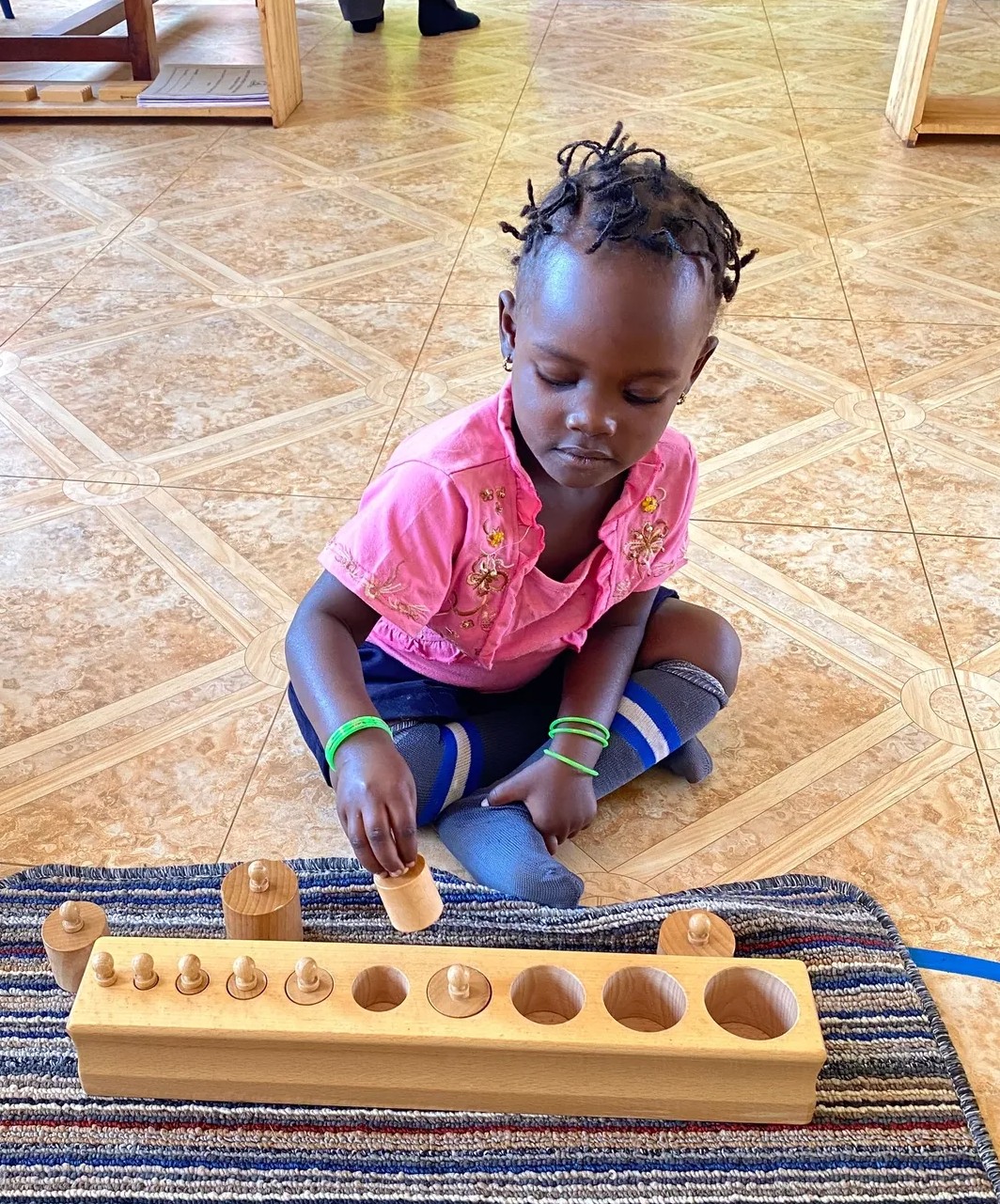
We believe education is the most powerful path to ending poverty and transforming lives in vulnerable communities — but real learning doesn’t happen in isolation. That’s why we don’t just educate. We nourish, support, equip, and empower the whole child.
Our Holistic Quality Education Model brings together the seven core elements we’ve seen make the greatest difference. Together, they create the foundation for children to thrive — and for communities to build prosperity on their own terms.
Valuing each child's uniqueness, encouraging independence, and allowing self-directed learning at their own pace.
A calm, orderly, and stimulating classroom with natural light, specific materials, and beauty, designed for independent exploration.
Recognizing children's innate ability to absorb knowledge and their specific windows of intense focus for learning certain skills (like language or order).
Children learn through their own activity and self-correction, not just teacher instruction.
Children choose their work, but within established boundaries that ensure respect for others and the environment.
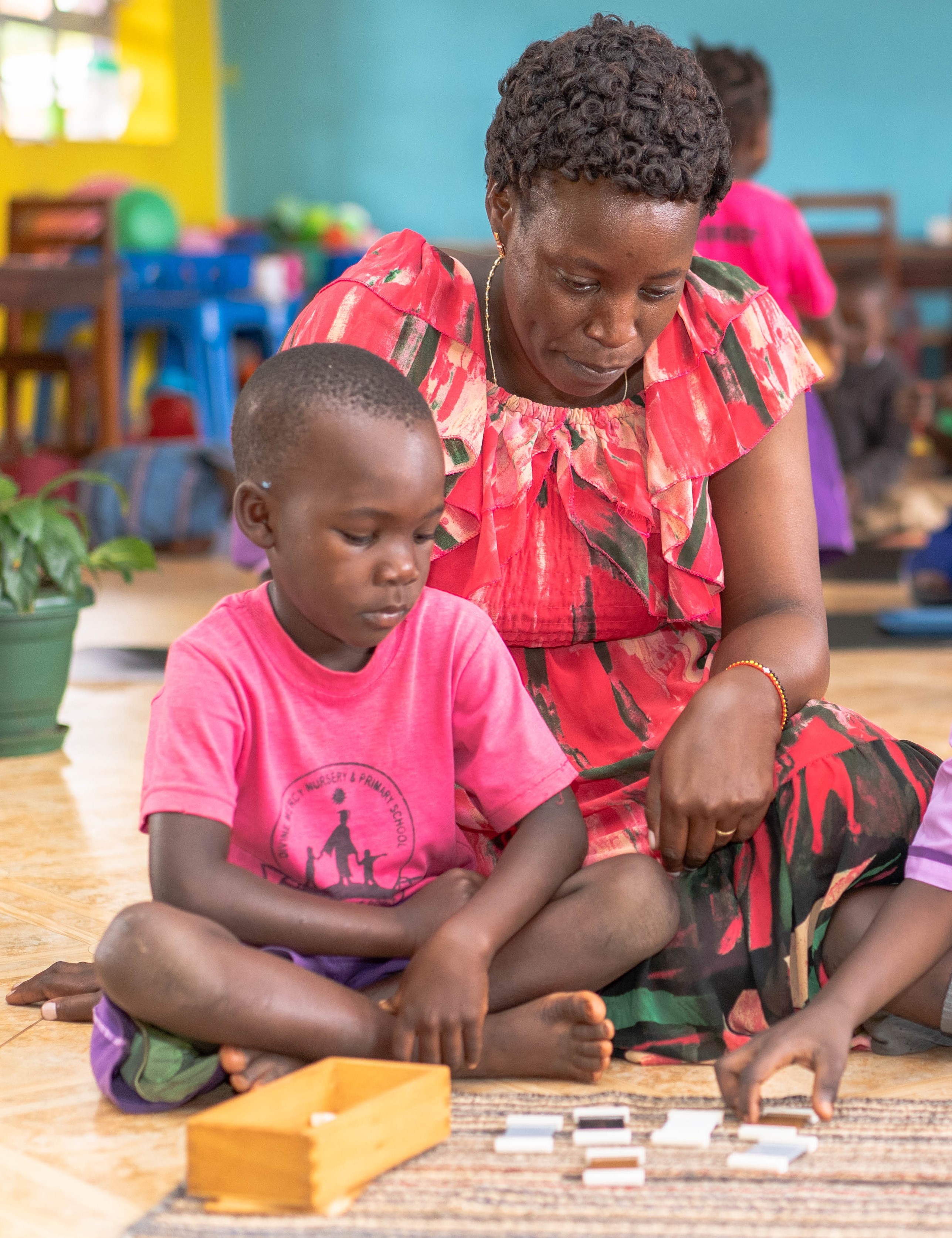
Teachers act as guides, carefully observing children to understand their needs and offer support without interrupting deep concentration.
The Montessori curriculum focuses on presenting a practical learning environment and support, while fostering and emphasizing a significant level of independence and input from the learner, with the limits of the educator, who leads the way while deploying some of these tools:
Practical Life
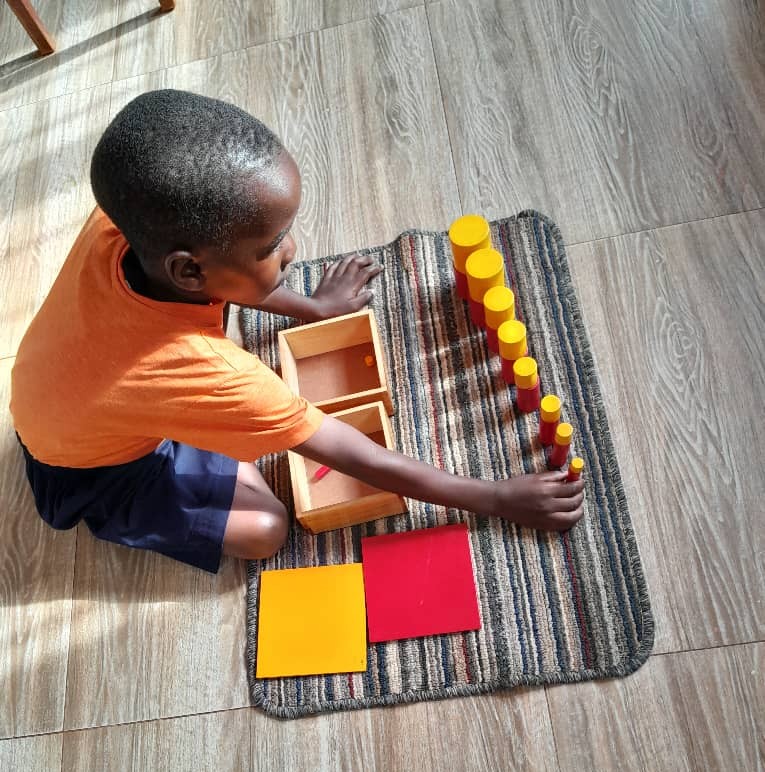
Activities for daily living (pouring, dressing, cleaning) that build coordination,
concentration, and independence.
Sensorial
Materials designed to refine the senses (touch, sight, sound) and classify perceptions, forming
the basis for math and language.
Language
Developing listening, speaking, reading, and writing skills through phonetic materials.
Mathematics
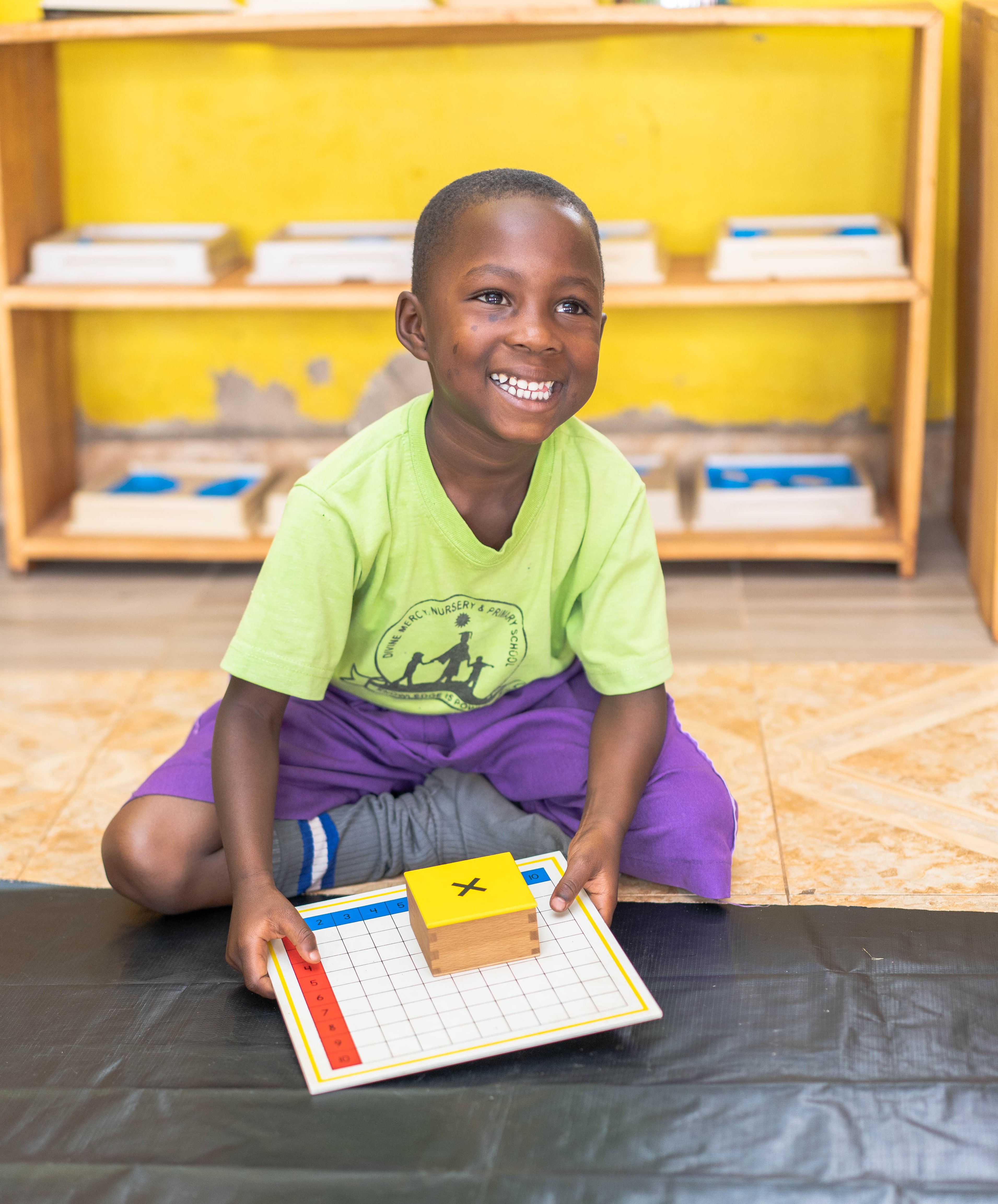
Concrete materials that teach concepts of quantity, operations, and place value.
Culture
Exploring geography, history, science, art, and music to understand the world.